Bishop James shares personal reflection on calling and key priorities
Members of Truro Diocesan Synod heard from the Rt Revd James Treasure, Bishop of St Germans, as he offered a personal reflection on his calling and set out key priorities for the life of the Church in Cornwall and the Isles of Scilly.
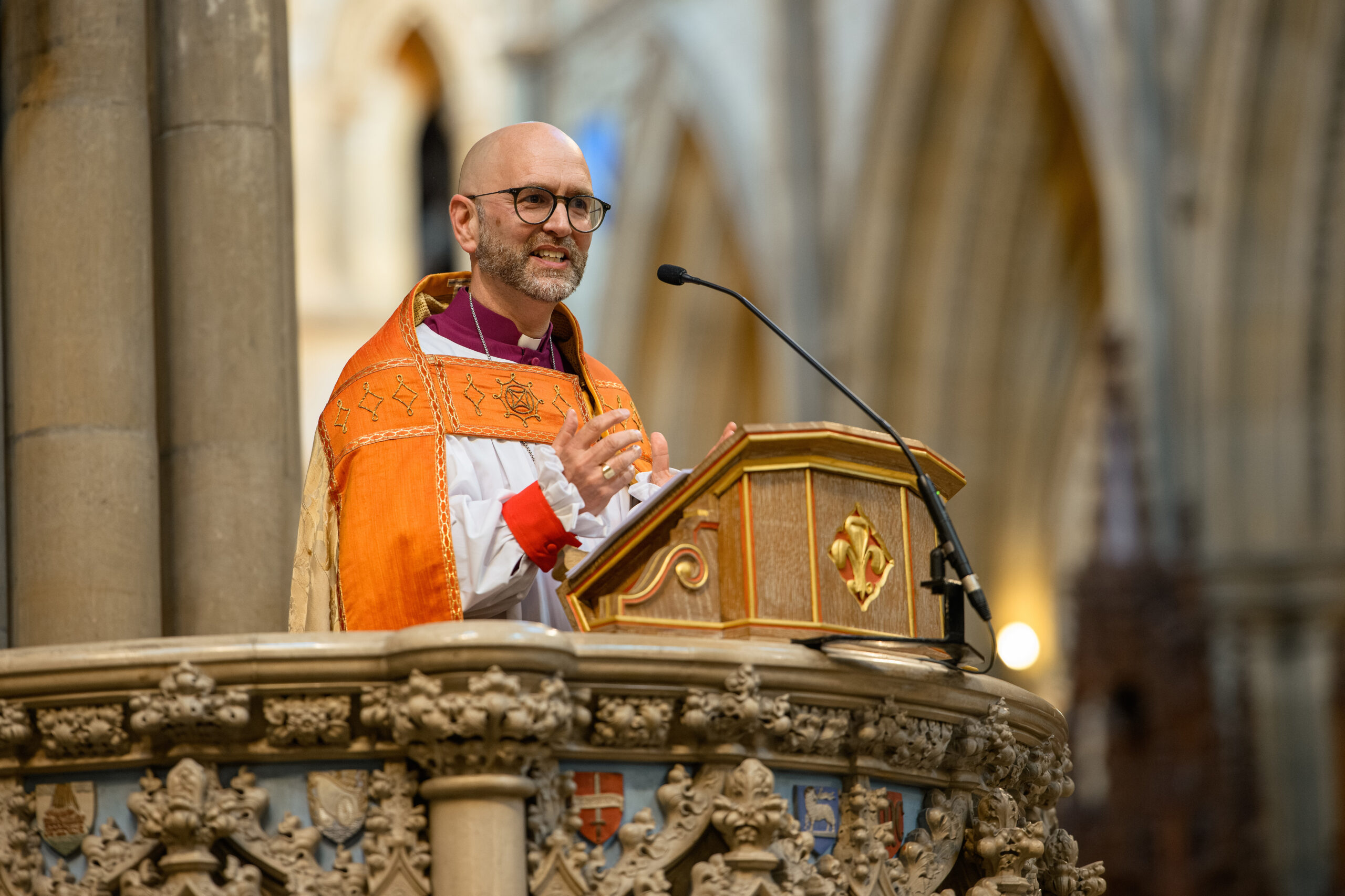 Speaking warmly of his welcome, Bishop James described a deep sense of vocation to the diocese that emerged during the discernment process. He recalled how both he and his wife experienced a powerful sense of God’s presence from their first visit, a conviction that has continued to shape his approach to ministry in Truro.
A Ministry Rooted in Prayer and Tradition
At the heart of his address, the bishop spoke about the spirituality that underpins his ministry. Formed in the evangelical tradition, he highlighted its enduring gifts: a love of Scripture, commitment to local church life and a desire to share the Gospel.
Alongside this, he reflected on how personal experiences, including his wife’s illness, led him to explore more contemplative expressions of faith. Drawing on influences such as the Franciscan tradition, he described a spirituality shaped by Scripture, prayer and the Eucharist, holding together evangelical, catholic and charismatic strands.
The Gospel: Personal and Public
Bishop James emphasised that his understanding of the Gospel lies at the centre of all he does. He described it not simply as a private matter of individual faith, but as “public truth” – good news with implications for the whole of society.
Referencing the influence of theologian Lesslie Newbigin, he stressed the importance of holding together both the personal and public dimensions of Christian faith: transforming individual lives while also engaging with the wider world.
A Vision Rooted in Place
Looking ahead, the bishop spoke of his desire to help articulate a clear and compelling vision for the diocese, one rooted deeply in local communities rather than imported from elsewhere.
Recognising the diversity of Cornwall and the Isles of Scilly, he reflected that each church and community carries something unique, and that ministry must be shaped by local context. With more than 300 churches across the diocese, he affirmed a commitment to supporting each one to flourish in its own way.
He also expressed confidence that churches can grow, not uniformly, but in ways appropriate to their setting, both in depth of faith and in numbers.
Commitment to the Margins
A strong theme in the address was a commitment to those on the margins. Drawing on his experience in urban ministry, Bishop James highlighted practical examples of church-based outreach, including food banks, debt advice and support for vulnerable families
He stressed that such work is not an optional addition but integral to the Gospel itself, pointing to Jesus’ consistent focus on those often excluded or overlooked.
Growing Younger
The bishop also underlined the importance of engaging children, young people and families. Acknowledging the widening gap between younger generations and the Christian faith, he called for renewed focus on passing on the story of Jesus in ways that connect with today’s context.
He pointed to initiatives such as schools work, youth ministry and intergenerational worship as key areas for development, describing this as both an urgent challenge and an opportunity for the Church.
Encouraging Vocation and Leadership
Finally, Bishop James spoke about the importance of recognising and nurturing vocation. He highlighted the joy of seeing individuals discover their calling, whether lay or ordained, and emphasised the need to develop leaders across all areas of church life.
Encouraging a culture where people are supported to respond fully to God’s call, he described this as essential for the future vitality of the Church.
