Complexity of Corker Memorial Discussions highlighted in presentation
Members of Truro Diocesan Synod heard a thoughtful and reflective presentation on the ongoing conversations surrounding the memorial to Thomas Corker at King Charles the Martyr Church, Falmouth.
Rather than offering a detailed chronology of events, the presentation by Rebecca Evans, Ministry Development and Inclusion Officer, focused on the experience of engaging with the issue, emphasising the importance of presence, curiosity and the challenge of reimagining a way forward together.
A Complex and Contested Issue
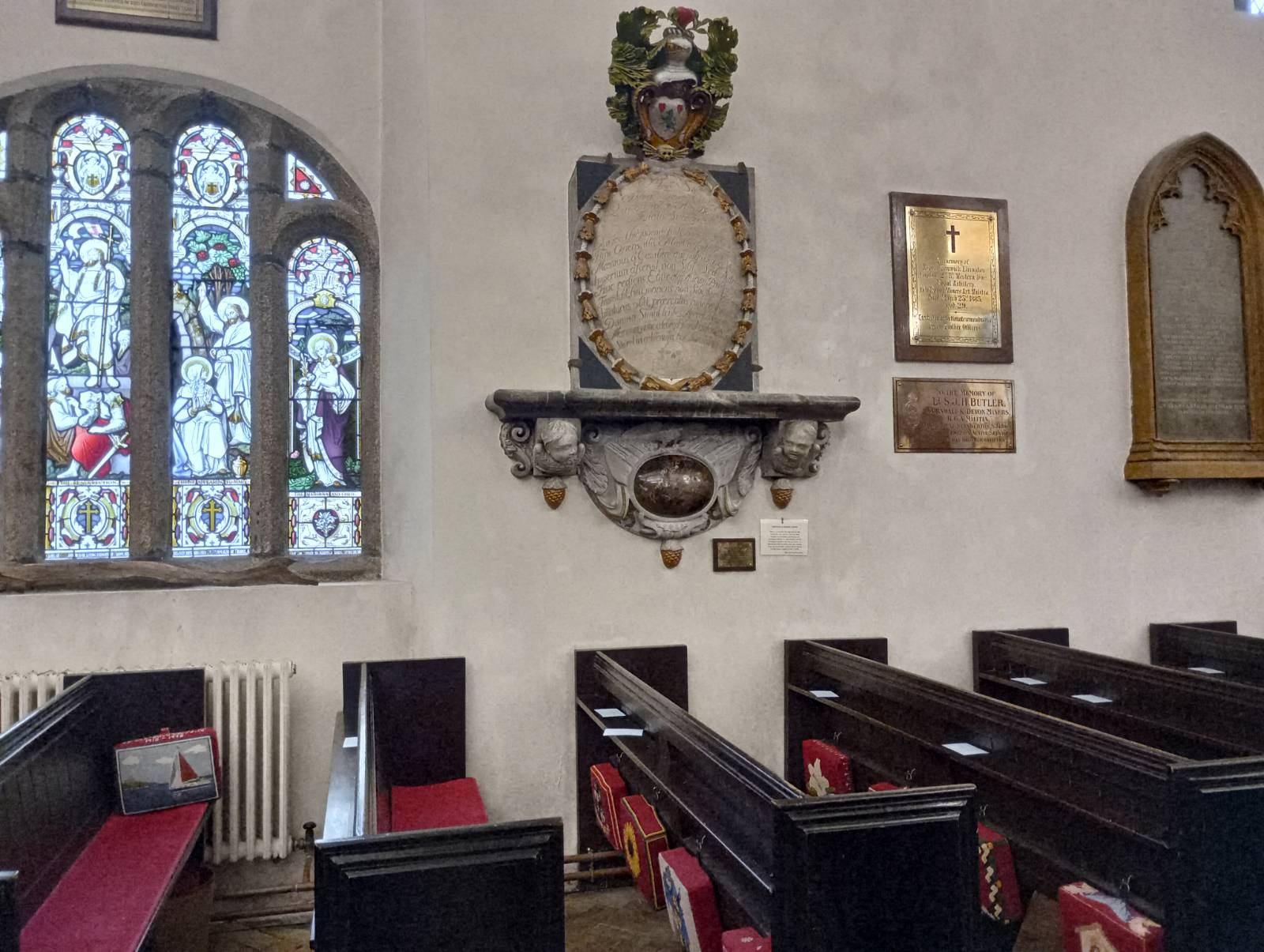 The memorial, dedicated to a trader of enslaved people, has attracted significant public attention and remains a source of strong and differing views within the community.
Synod heard that, while the Parochial Church Council (PCC) voted to remove the memorial, progress has been limited by practical barriers, including the lack of a suitable alternative location. This has meant further consultation has been needed before any Faculty application can proceed.
Listening to a Wide Range of Voices
A key focus of the presentation was the importance of creating space for listening. Community consultations have brought together a wide range of participants, including Black Voices Cornwall, the Falmouth Civic Society, local organisations, historians and individual residents.
While there is a shared recognition that the slave trade was abhorrent, Synod heard that there is no single agreed view on how the Church should respond to the memorial.
Perspectives shared include:
- concern from some that the memorial causes distress and acts as a barrier to entering the church
- a conviction among others that it should remain to enable learning from history
- a wide range of suggested responses, from relocation to covering, contextualisation or retention in situ.
The Challenge of Holding Difficult Conversations
Rebecca acknowledged how challenging and at times emotionally charged these discussions have been.
Synod members heard about the importance of setting clear expectations around behaviour and ensuring that individuals do not claim to speak for others without appropriate authority.
Rebecca said: “At its best, the Church has sought to provide a space where different views can be expressed and explored, not necessarily resolved, with a commitment to listening attentively to why people hold differing perspectives.”
An Interim Way Forward
As part of the ongoing process, an interim approach has been agreed: focusing on contextualisation, education, and continued engagement, alongside gathering further feedback about longer-term options. However, Synod heard clearly that no outcome is likely to satisfy all viewpoints, and that part of the challenge is recognising the limits of consensus in such a complex situation.
Deeper Questions for the Church
Beyond practical decisions, the presentation invited Synod to reflect on wider theological questions, including how the Church understands justice, memory and inclusion.
These reflections include tensions between:
- the call to welcome all people into places of worship
- the reality that historical legacies can continue to cause pain and exclusion
- the challenge of responding faithfully to the past while proclaiming the Gospel today.
Through her presentation Rebecca also raised broader questions about how wealth, power and influence shape the life of the Church – not only in the past, but in the present.
Continuing the Conversation
Synod members were encouraged to see the process not simply as a problem to be solved, but as an ongoing journey of listening, learning and discernment.
While the issue remains unresolved, the presentation highlighted a commitment to approaching it with humility, honesty and openness – seeking to be attentive to the experiences of others and willing to engage with difficult questions together.
